
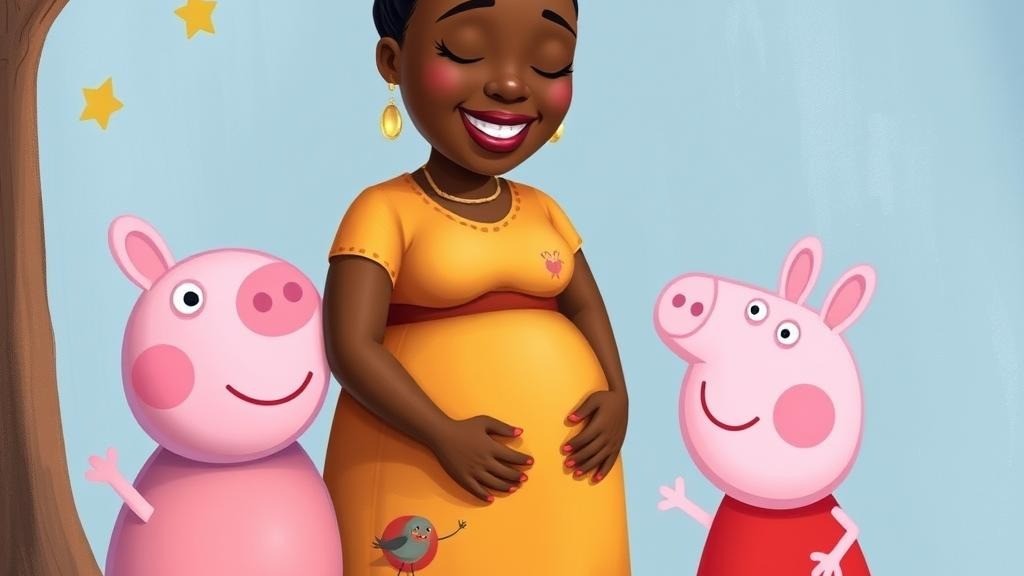
Recently, the world was taken by surprise with the announcement that Peppa Pig’s mom, Mummy Pig, is pregnant! While this might be an exciting development in the animated world of Peppa Pig, let’s take a fun yet insightful look at what it would be like if Mummy Pig were an African working mom navigating pregnancy in the modern job market.
Mummy Pig is already a working mom in the Peppa Pig universe—she works from home as an architect, balancing career and family life. If she were an African working mom, she would likely experience a mix of professional and societal expectations while juggling her responsibilities. Much like many African mothers, she would need to find a balance between work deadlines, pregnancy-related fatigue, and managing Peppa and George’s daily antics.
Pros of Being a Pregnant Working Mom in African countries
- Supportive Work Cultures – Many African companies, particularly in industries like banking, telecommunications, and NGOs, provide strong maternity leave policies and workplace support for expectant mothers.
- Strong Family Support Systems – Unlike in many Western cultures, African societies emphasize extended family networks. This means that Mummy Pig might have her own mother, sisters, or even community members helping out with childcare and household responsibilities.
- Increased Awareness on Workplace Equity – Many companies are now implementing gender-inclusive policies, including paid maternity leave, flexible work schedules, and designated nursing rooms.
- Entrepreneurial Flexibility – If Mummy Pig were an entrepreneur, like many African women, she might have the freedom to set her own work hours while preparing for the new baby.
Cons of Being a Pregnant Working Mom in African countries
- Workplace Discrimination – Despite progress, some African women still face discrimination in promotions and job retention when they announce their pregnancy. According to the International Labour Organization (ILO), nearly 40% of women in Africa have experienced workplace discrimination due to pregnancy or motherhood compared to 43% in the the Netherlands in 2016 according to College van the rechten van mens.
- Limited Maternity Leave in Some Sectors – whilst according to ILO 48% of African countries provide at least 14 weeks of maternity leave and 35% offer 12-13 weeks, nearly 20% offer less than 12 weeks, and this do not cover women in the agricultural or informal sector which accounts to 47% of agricultural workforce
- High Expectations at Home and Work – Mummy Pig, like many African moms, would be expected to balance both professional duties and household responsibilities, which can lead to burnout. Studies show that African women spend three times more hours on unpaid domestic work compared to men, making work-life balance even harder.
- Healthcare Accessibility – In certain African regions, accessing quality prenatal healthcare while working a full-time job can be a challenge. The WHO states that only 68% of pregnant women in sub-Saharan Africa receive at least four prenatal visits, which is the minimum recommended standard. Whilst countries like Cote d’Ivoire and Ethiopia have made efforts to provide social security coverage to the agricultural sector and independent workers, there is still a significant portion that still lack coverage.
How African Companies Support Pregnant Women
Even though Daddy Pig is often portrayed as a bit clumsy, he does support Mummy Pig at home—something that many African households are now embracing as fathers become more involved in parenting. Similarly, African companies and government policies are making strides in ensuring pregnant employees feel supported. Here are some ways businesses are stepping up:
- Paid Maternity Leave: Many African countries offer maternity leave, with 48% providing at least 14 weeks and 62.9% ensuring full pay during the leave.
- On-Site Childcare Facilities: Some organizations, especially in the banking and NGO sectors, provide daycare centers to ease the transition back to work.
- Work-from-Home and Hybrid Options: More companies are adopting flexible work arrangements to accommodate pregnant employees.
- Health and Wellness Programs: Organizations are partnering with healthcare providers to offer prenatal care programs for working mothers.
Mummy Pig might be interested to know where she could work and still get strong maternity benefits. Some African countries with paid maternity leave policies include:
- South Africa: 4 months of maternity leave, but only partially paid depending on the employer.
- Kenya: 3 months (90 days) of fully paid maternity leave.
- Rwanda: 12 weeks of fully paid maternity leave.
- Nigeria: 16 weeks of paid maternity leave for government employees and 12 weeks for private sector workers.
- Ghana: 12 weeks of paid maternity leave with an option for an additional two weeks in case of complications.
- Ethiopia: 4 months of maternity leave, with 3 months fully paid.
Just like how Mummy Pig efficiently handles challenges in the Peppa Pig series, African working moms find ways to thrive despite societal pressures. It’s no surprise that Peppa Pig has become a global phenomenon since its debut in 2004—highlighting relatable family dynamics in a humorous way. And if Mummy Pig can balance family life while dealing with the occasional mess Peppa and George make, then surely African moms can too, with the right support systems in place!
For women like Mummy Pig, finding an inclusive employer is key to balancing work and family life. At IWIA, we provide African professionals with a platform that leads to companies in Africa committed to gender equity, diversity and fair employment practices.
Does your organisation struggle to keep female employees and you lose time and investment training and retraining? We assist companies and organisations to develop policies, structures and measures that attract, accommodate and retain talent, making your company a more inclusive place to work
Whether Mummy Pig is in the UK or navigating the African job market, one thing remains true: working moms everywhere deserve support, equity, and work environments that recognize their immense contributions. Here’s to making workplaces better for every mother—animated or not!